How Machine Learning Algorithms Optimize Player Matching Systems in Digital Poker Environments Worldwide
Jordan Schmid · Aug 21, 2026

How Machine Learning Algorithms Optimize Player Matching Systems in Digital Poker Environments Worldwide
Digital poker platforms rely on machine learning to pair players with similar skill levels while maintaining game integrity across international markets, and these systems process vast datasets from millions of hands played each day. Researchers have developed algorithms that track metrics such as win rates, fold frequencies, and aggression indices to create balanced tables where outcomes depend more on strategy than mismatched experience levels.
Early matching methods used simple rating systems similar to chess Elo scores, yet modern approaches incorporate neural networks that adapt in real time. Data from platforms operating in regulated markets shows that these models reduce player churn by identifying patterns where novices face experts too often, which leads to frustration and account closures. Observers note that clustering techniques group users into skill tiers based on historical performance, adn reinforcement learning refines these groups after each session to reflect recent improvements or declines.
Core Mechanisms Behind Skill-Based Pairing
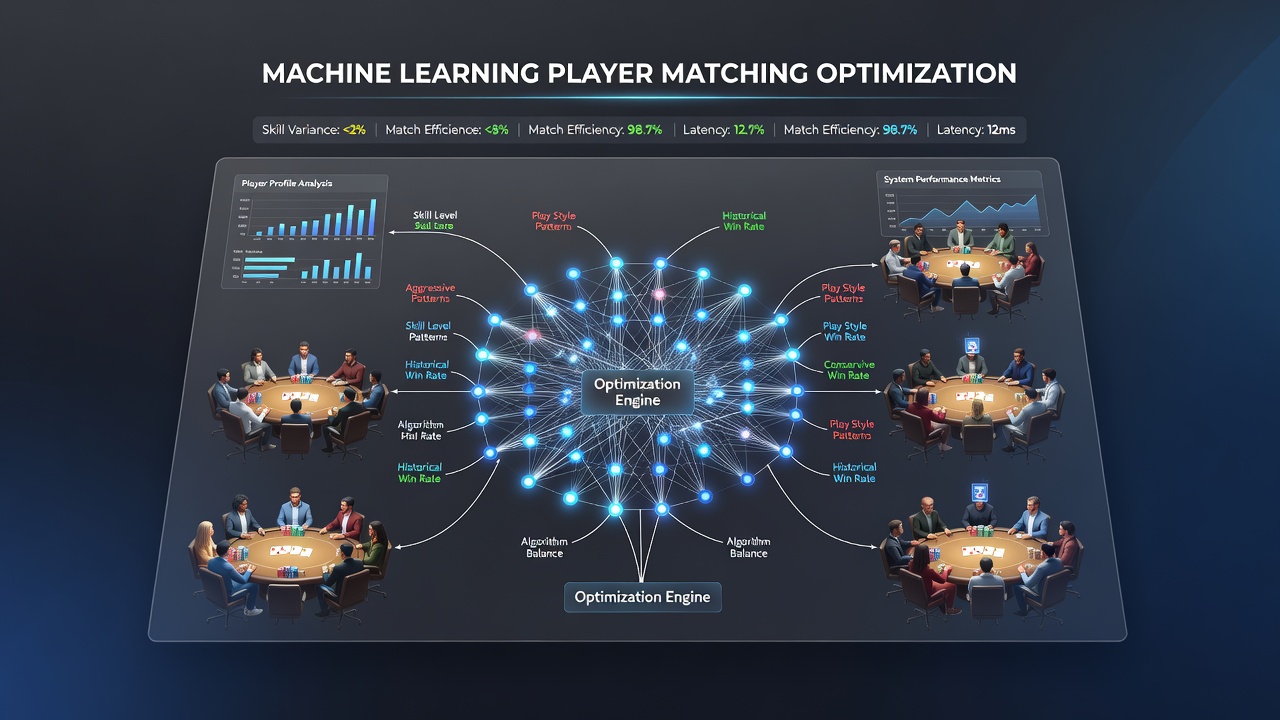
Algorithms analyze thousands of variables per player, including hand selection tendencies and bluff success rates, then feed this information into predictive models that forecast table dynamics before any cards are dealt. Supervised learning trains on labeled datasets from past matches to predict satisfaction scores, while unsupervised methods discover hidden subgroups such as tight-aggressive versus loose-passive styles without predefined categories. Platforms in North America and Europe apply anomaly detection to flag potential collusion or bots during the matching process, which prevents unfair advantages before they affect results.
What's interesting is how these systems balance speed with accuracy, because overly strict criteria can leave players waiting too long for suitable opponents. Engineers integrate multi-armed bandit frameworks to test new matching rules on small player subsets before wider rollout, and results indicate faster convergence to fair games when models update hourly rather than daily. In August 2026 several major operators reported deploying updated versions that incorporate graph neural networks to map social connections and avoid pairing known associates at the same virtual table.
Regional Adaptations and Regulatory Influences
Implementation varies by jurisdiction because different licensing bodies impose distinct requirements on fairness and transparency. Operators licensed in Nevada coordinate with the Nevada Gaming Control Board to document how algorithms prevent exploitation, whereas Australian markets follow guidelines from the Australian Communications and Media Authority that emphasize consumer protection through verified matching logs. European operators often reference studies from the European Gaming and Betting Association when refining their systems, and these reports highlight measurable drops in dispute rates after machine learning integration.
Platforms serving Asian markets face additional challenges from high-volume recreational traffic mixed with professional players, so models there weight recent session data more heavily to capture short-term form changes. Cross-border play introduces further complexity because latency differences and time zones affect participation patterns, yet distributed computing allows real-time synchronization of global player pools without compromising match quality. One study from a Canadian research institution revealed that hybrid models combining demographic signals with behavioral data improved retention among newer users by approximately 18 percent over purely statistical approaches.
Performance Metrics and Continuous Improvement
Key performance indicators include average table variance, player return rates after matches, and complaint volumes related to perceived unfairness. Teams monitor these figures through dashboards that visualize model confidence scores, and they retrain networks whenever drift exceeds predefined thresholds. A Nevada Gaming Control Board analysis from early 2026 documented how one large network reduced mismatched tables by 27 percent after switching to gradient-boosted decision trees for initial tier assignment.
Case examples show operators testing ensemble methods that combine multiple algorithms to hedge against individual weaknesses, and results from live A/B experiments demonstrate superior stability compared with single-model baselines. Those who manage these systems often discover that incorporating feedback loops from post-game surveys refines predictions faster than relying solely on in-game statistics. Seasonal tournament cycles create temporary spikes in high-skill traffic, so models automatically adjust weighting to protect lower-tier players during peak periods.
Conclusion
Machine learning continues to reshape player matching by turning raw hand histories into actionable pairing decisions that span continents and regulatory frameworks. Data from multiple jurisdictions confirms steady gains in fairness metrics as models grow more sophisticated, and ongoing research from academic and industry sources supports further refinement through new architectures and richer feature sets. Platforms that maintain transparent documentation of these processes meet compliance demands while delivering consistent experiences to users worldwide.